Why Wilton Manors Properties Are at High Risk for Water Damage
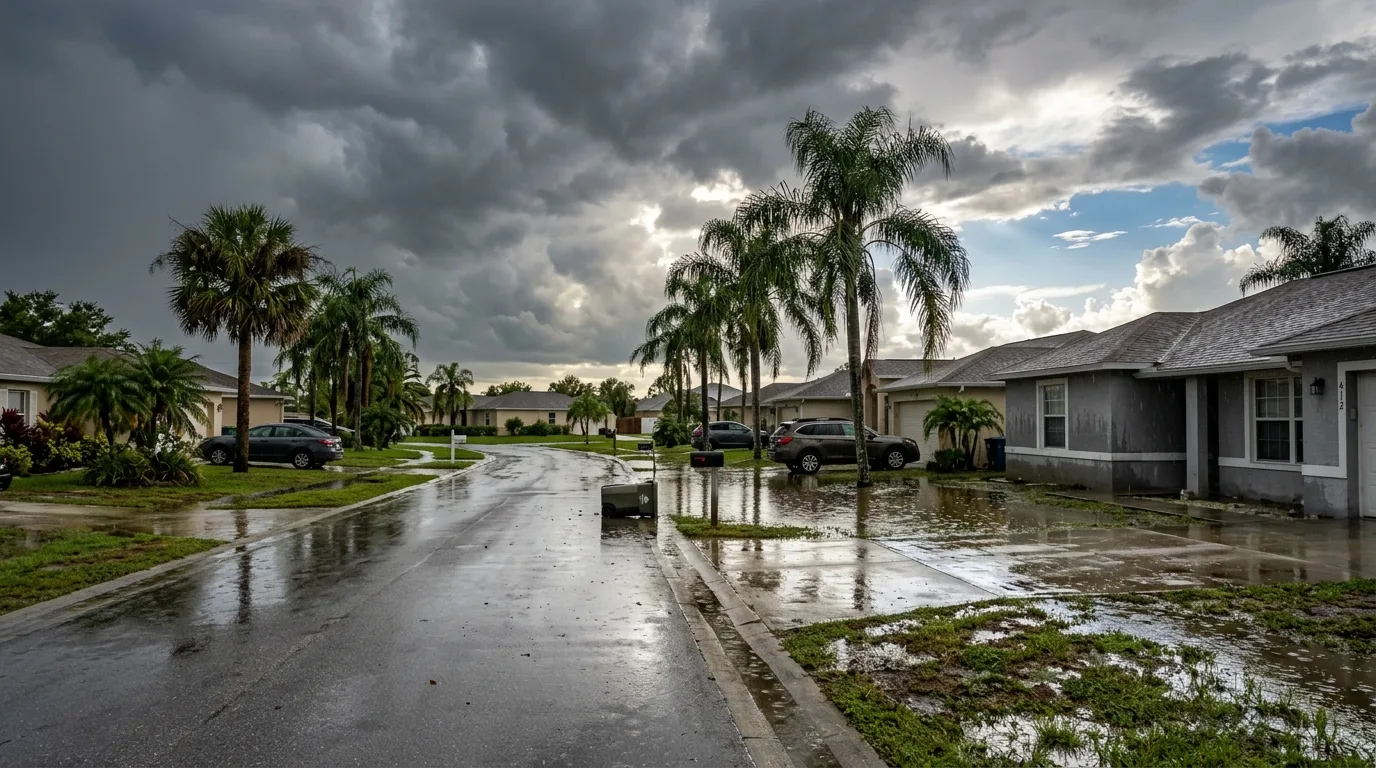
According to flood risk data published by First Street Foundation, 98.7% of Wilton Manors properties will face flood risk within 30 years — up from 48.6% today. That projection makes Wilton Manors one of the highest-risk small cities in South Florida for water damage, and understanding why requires looking at four intersecting factors: climate, soil, infrastructure, and housing stock. In this post, we cover each factor and what they mean for homeowners trying to protect their properties.
Water Damage Assessment for Wilton Manors Homeowners
We identify your property's specific risk factors and can respond immediately when water damage occurs. Call (877) 698-1311.
Why Water Damage Risk Matters for Wilton Manors Homeowners
The financial and structural consequences of unmitigated water damage are severe. A water event that is professionally addressed within the first 24 hours typically costs $1,200–$5,600 to restore. The same event left untreated for 48–72 hours — allowing mold colonization in South Florida’s 70–85% humidity — can generate total restoration costs of $8,000–$20,000 or more. Understanding your property’s risk isn’t abstract preparedness planning; it’s the difference between a manageable repair and a catastrophic expense.
The Hagen Park area in East Wilton Manors and the lower-lying streets near the Middle River canal system are particularly exposed, but no neighborhood in this 2-square-mile city is without meaningful water damage risk. Here’s why.
Climate: The Foundation of Wilton Manors’ Water Damage Risk
Wilton Manors receives approximately 65 inches of rainfall annually — nearly double the U.S. average. This rainfall is not evenly distributed: the wet season (May through October) delivers intense afternoon thunderstorms almost daily, with the peak months of August through October also coinciding with the height of Atlantic hurricane season (June 1 through November 30).
What makes this climate particularly dangerous for property owners is the combination of intensity and humidity. A typical wet-season thunderstorm delivers 2–4 inches of rain in 45–90 minutes — far faster than drainage infrastructure can clear. The humidity that follows these events (sustained at 80–90% during wet season afternoons) means that wet materials inside homes don’t air-dry naturally. Without active structural drying using commercial dehumidifiers, any moisture that enters a structure will persist long enough to create ideal mold conditions.
Soil and Geology: Why Water Doesn’t Drain Away
Wilton Manors sits on sandy soils over the porous Biscayne Aquifer — one of Florida’s primary freshwater sources. The aquifer’s high water table, typically just 3–6 feet below the surface, creates a condition where soil moisture is already elevated even before rain events begin. During the wet season, the water table rises further, and the sandy soil that otherwise drains quickly becomes saturated.
The practical result for homeowners is that heavy rainfall events produce surface flooding that lingers because the soil literally cannot absorb more water. Low-lying areas near the Middle River canals experience this most acutely — drainage that functions adequately in normal rain cannot keep up with tropical downpours, and water backs up against foundations and into lower-level spaces. Properties in South Wilton Manors near Richardson Park and West Wilton Manors near the Colohatchee Nature Park area are particularly affected by this dynamic.
Infrastructure: Aging Systems Under Increasing Stress
Wilton Manors is a fully built-out city with no room for new development — all infrastructure improvements must be retrofitted into an existing urban fabric. The city’s stormwater drainage infrastructure was largely designed and installed in the mid-20th century, before climate projections showed the degree of rainfall intensification South Florida now experiences.
Twenty-eight flood risk reduction projects (levees and drainage improvements) have been implemented in the Wilton Manors area, reflecting the ongoing effort to manage flood risk in a city that never anticipated it would face this challenge at this scale. When these systems are overwhelmed — which happens during major rain events — the Middle River canal system becomes a two-way conduit: instead of draining the city’s stormwater, it can contribute to flooding when water levels in the canal rise above the surrounding land grade.
Housing Stock: Mid-Century Homes in a Modern Storm Environment
Wilton Manors has a median home age consistent with 1950s–1970s construction, and much of this housing stock was built before modern flood-resistant construction standards. Original construction typically lacks modern vapor barriers, has limited subfloor waterproofing, and may include original cast iron drain lines and galvanized steel supply lines at or beyond their design lifespan.
These homes absorb water faster and dry more slowly than modern construction — water mitigation in a 1965 CBS home requires more aggressive drying protocols than in a 2010 build of comparable square footage. Many mid-century Wilton Manors homes also have concrete block construction, which can wick moisture through block walls from the outside during sustained rain events or when standing water is present against foundation walls.
The 30-Year Projection: Why This Gets Harder
The First Street Foundation’s projection that 98.7% of Wilton Manors properties will be at flood risk within 30 years reflects the compound effect of sea level rise (Broward County projects 10–17 inches by 2060) and increasing rainfall intensity from climate change. As the water table rises over time, the same rain events that cause manageable surface flooding today will cause more persistent and more damaging flooding in 2040 and 2050.
For current homeowners, this projection has two practical implications: flood insurance is becoming a necessary expense, not a discretionary one, and water damage restoration preparedness — knowing your contractor before an event, not during — is increasingly valuable.
Frequently Asked Questions
What FEMA flood zone is Wilton Manors in?
Much of Wilton Manors falls within FEMA Special Flood Hazard Areas (SFHAs), designated as Zone AE, which indicates a 1% annual chance of flooding (100-year flood) with base flood elevations established. Properties in these zones with federally-backed mortgages are required to carry flood insurance. Contact your local Broward County FEMA coordinator or visit FEMA’s Flood Map Service Center for the specific designation for your address.
How do I know if my Wilton Manors property is at flood risk?
The First Street Foundation’s Flood Factor tool allows property-specific flood risk assessment using address lookup. Additionally, FEMA’s Flood Map Service Center shows official flood zone designations. Physical indicators of elevated risk include proximity to the Middle River canal system, low elevation relative to surrounding streets, and any history of water intrusion in the property’s past.
What can I do to reduce water damage risk in my Wilton Manors home?
The most effective risk reduction steps include: maintaining flood insurance coverage, inspecting and improving roof drainage systems before each hurricane season, inspecting aging plumbing (particularly cast iron drain lines in pre-1980 homes), installing water leak sensors at all appliances and supply shutoffs, and establishing a relationship with a restoration contractor before an emergency occurs. Read our pre-hurricane season inspection checklist for a full pre-season preparation guide.
Related Resources:
- Complete Guide to Water Damage Restoration in Wilton Manors
- Wilton Manors Flood Risk: What Every Homeowner Should Know
- How Hurricane Season Affects Wilton Manors Homeowners
Protect Your Wilton Manors Property
Call (877) 698-1311 for a pre-season water damage risk assessment or immediate 24/7 emergency response. Serving Wilton Manors, Fort Lauderdale, Oakland Park, and all of Broward County.