Water Mitigation vs. Water Restoration in Wilton Manors, FL
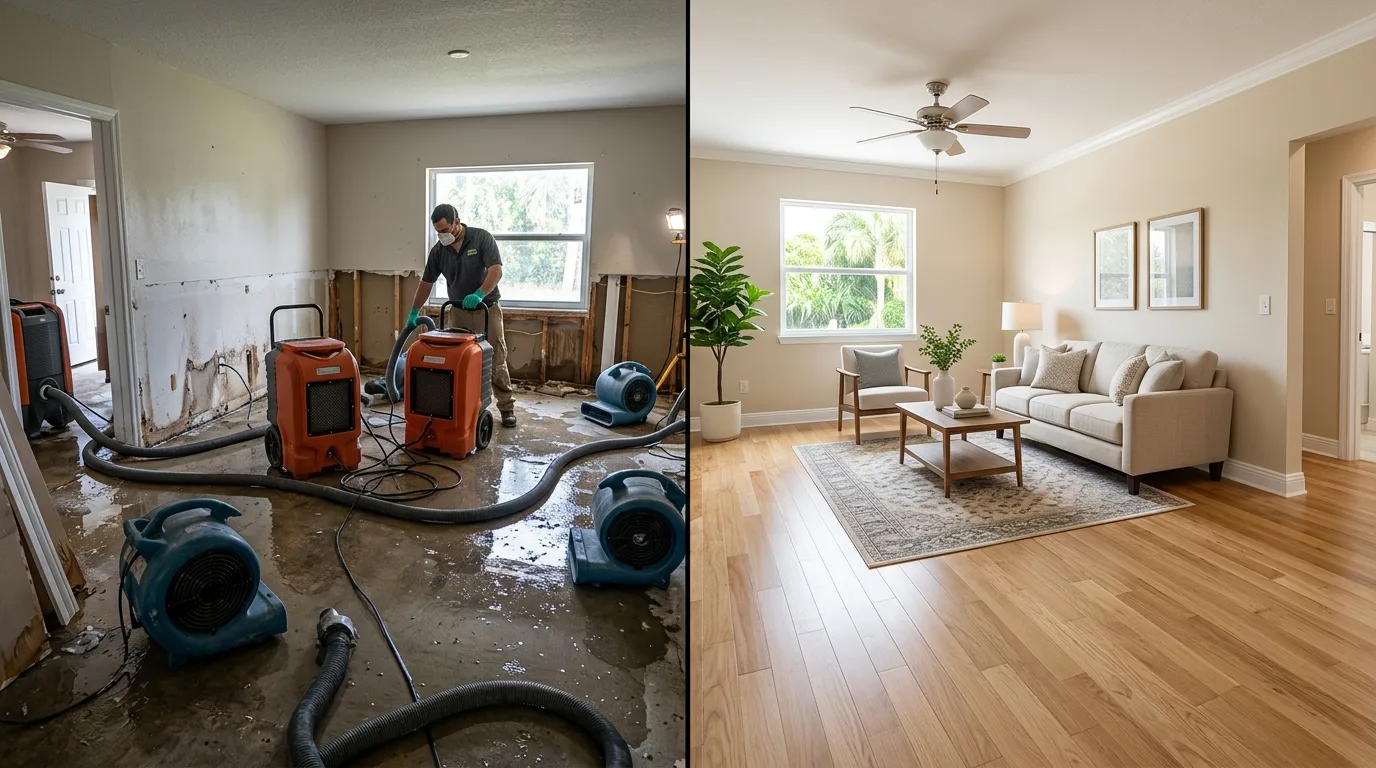
If you’ve ever called about water damage in Wilton Manors and heard the terms “mitigation” and “restoration” used somewhat interchangeably, you’re not alone in wondering what the distinction is. The difference actually matters significantly when dealing with insurance claims in Broward County, because these two phases of water damage work are often billed separately, covered differently under your policy, and managed by different contractors in some restoration models. Here’s a clear explanation of what each term means and why the distinction matters for Wilton Manors homeowners.
Full-Service Water Damage Response in Wilton Manors
We handle both mitigation and restoration under one roof — no coordination gap. Call (877) 698-1311 for 24/7 emergency response.
Why This Distinction Matters for Wilton Manors Homeowners
In Wilton Manors’ high-humidity, high-rainfall environment, the mitigation phase is the most time-critical. Every hour of delay in beginning water extraction and structural drying expands the scope of both the mitigation itself and the restoration that follows. Understanding what mitigation is — and what it is not — helps homeowners make the right call in the first hours after a water event, rather than waiting for an adjuster or a general contractor who handles only the reconstruction phase.
The distinction also matters for insurance navigation. Most homeowners policies cover “sudden and accidental” water damage, and mitigation costs are typically covered alongside restoration costs — but they are often reimbursed through a different process and with different documentation requirements. Knowing that mitigation and restoration are separate phases helps you ask the right questions when reviewing your claim settlement.
Water Mitigation: Stopping the Damage
Water mitigation refers to all actions taken to prevent water damage from spreading or worsening after the initial event. It is the emergency phase of water damage response. Mitigation includes:
- Water extraction: Removing all standing water using truck-mount systems, submersible pumps, and wet vacuums
- Moisture mapping: Using thermal imaging and moisture meters to identify all affected areas, including hidden moisture in wall cavities
- Structural drying: Placing commercial dehumidifiers and air movers to dry structural materials to IICRC S500 moisture content standards
- Material removal: Removing saturated materials (wet drywall, insulation, carpet) that cannot be dried in place and would become mold sources
- Antimicrobial treatment: Applying EPA-registered antimicrobial agents to all affected structural surfaces to prevent mold growth during and after drying
The mitigation phase typically takes 3–7 days in Wilton Manors, with daily monitoring of moisture readings to confirm drying progress. Mitigation ends when all remaining structural materials have reached target moisture content — confirmed by written moisture documentation, not by visual appearance.
The purpose of mitigation is to stop the damage from expanding and to create the conditions necessary for reconstruction to be durable. Reconstruction over wet materials is the most common cause of mold developing behind new walls.
Water Restoration: Returning to Pre-Loss Condition
Water restoration refers to the work done after mitigation is complete to return the property to its pre-loss condition. Restoration includes:
- Reconstruction: Installing new drywall, insulation, and wall assemblies where materials were removed during mitigation
- Flooring replacement: Installing new hardwood, laminate, tile, or carpet in affected areas
- Painting and finishing: Priming and painting new drywall and restoring wall surfaces
- Fixture and cabinet restoration: Reinstalling or replacing millwork, cabinets, and fixtures affected by water damage
- Structural repairs: If structural framing members were damaged, sister joists, replace damaged blocking, or address any structural impact
The restoration phase timeline varies with scope: a single bedroom with limited drywall replacement may take 1–2 weeks; a major flooding event affecting multiple rooms with structural work may take 4–8 weeks.
How These Phases Interact in Practice
In the best-case scenario, one contractor handles both mitigation and restoration — creating seamless continuity between phases without a coordination gap. The mitigation team that mapped moisture and removed wet materials has firsthand knowledge of what was affected and to what extent, which directly informs accurate reconstruction scoping.
In some insurance models, the carrier assigns a mitigation-only contractor and leaves restoration to a separate general contractor. This handoff creates risks: the restoration contractor may miss the full scope of mitigation damage if they didn’t observe it directly, and there may be a delay between mitigation completion and restoration commencement during which the property is open to the elements.
Wilton Manors Water Damage Restoration handles both phases — the same team that extracted your water and dried your structure rebuilds it. This eliminates coordination gaps and provides complete documentation from the initial moisture map through final reconstruction.
How Insurance Covers Mitigation vs. Restoration
Both mitigation and restoration costs are typically covered under a standard homeowners insurance policy that covers the underlying water damage event. However, they may be handled differently:
- Mitigation costs are often approved as emergency measures before a formal claim is filed
- Restoration costs are usually approved through the formal claim estimate process after the adjuster inspects
- Some policies have specific language about mitigation approval — review whether your policy requires prior authorization for mitigation work
All mitigation and restoration work should be documented with Xactimate — the estimating software that adjusters accept. Read our Broward County insurance claims guide for the full claims process.
Frequently Asked Questions
Which comes first — contacting insurance or starting mitigation?
Start mitigation first, then contact insurance. Most policies require “reasonable steps to prevent further damage” after a water event — waiting for adjuster authorization before beginning extraction can result in significantly more damage, which the carrier may use to limit claim coverage. Call for extraction immediately, then report the claim to your carrier. Document everything before cleanup begins with photos and video.
Can I get a quote for just the restoration phase in Wilton Manors?
Yes. If mitigation was already completed by another contractor and you need reconstruction services only, we provide restoration-only quotes with Xactimate documentation. We’ll typically review the mitigation scope documentation (moisture logs, equipment logs, and photos) to ensure we have complete information before quoting reconstruction.
Does water mitigation always lead to restoration work?
Not necessarily. Some water events can be fully resolved with mitigation alone — if the water was caught early, materials were thoroughly dried, and no structural materials required removal. In these cases, the property may return to its pre-loss condition without formal reconstruction. However, in Wilton Manors’ humid climate, even water events that appear minor often require some drywall removal and replacement because the moisture content in wall materials exceeds IICRC standards for drying in place.
Related Resources:
- Complete Guide to Water Damage Restoration in Wilton Manors
- Emergency Water Extraction Wilton Manors: What to Expect When You Call
- Water Damage Insurance Claims in Broward County
One Team for Mitigation and Restoration
Call Wilton Manors Water Damage Restoration at (877) 698-1311 — we handle both phases under one roof for Wilton Manors, Fort Lauderdale, Oakland Park, and all of Broward County.