Mold After Water Damage in Wilton Manors, FL: Why Homes Are at Risk
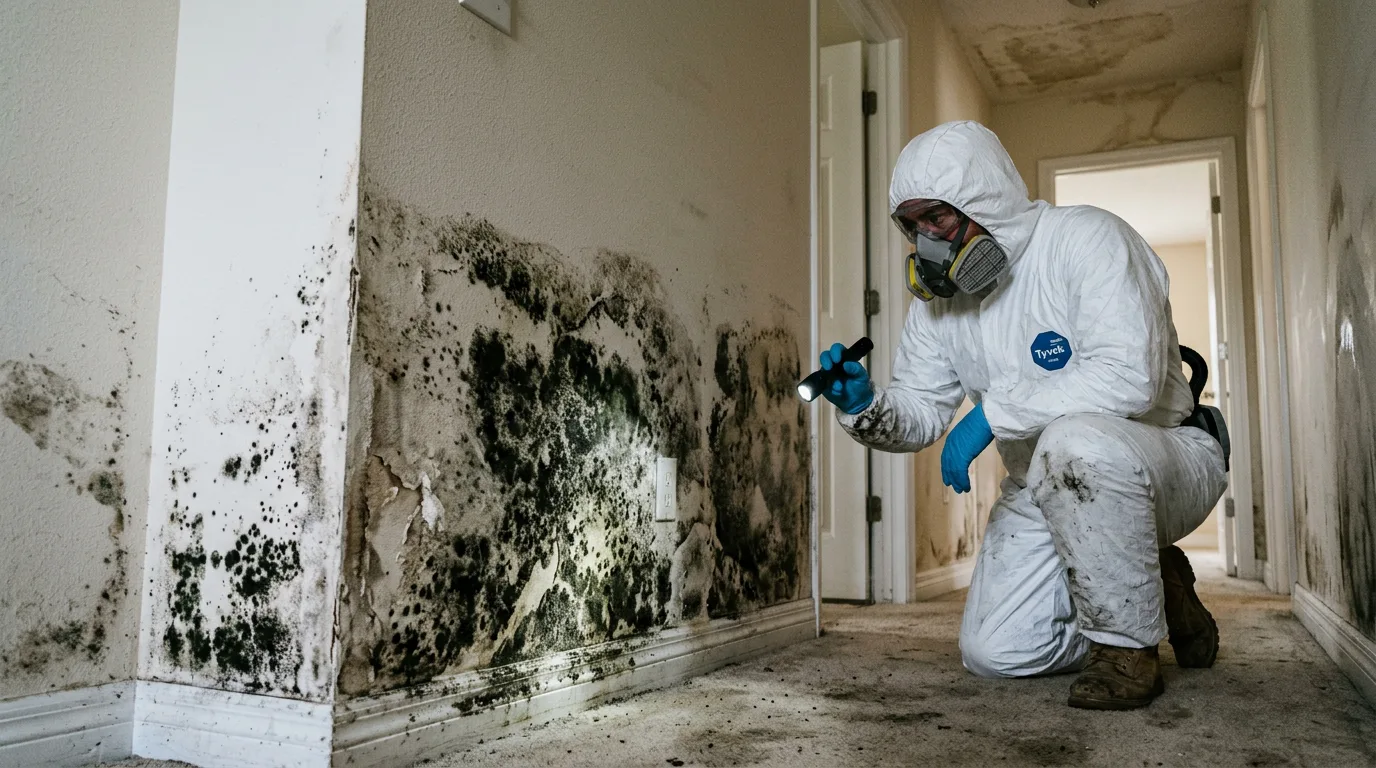
Most homeowners understand that mold can follow a water event — but few realize how quickly and aggressively mold colonizes in South Florida’s climate. In most parts of the U.S., the standard guidance is that mold begins growing within 24–72 hours after water exposure. In Wilton Manors, with year-round humidity averaging 70–85% and temperatures that never meaningfully cool, that window closes in 24–48 hours — sometimes less. This post explains exactly why Wilton Manors homes are at elevated mold risk and what professional mold remediation involves when water damage isn’t addressed fast enough.
Mold Concern After Water Damage in Wilton Manors?
We provide IICRC-certified mold inspection and remediation throughout Broward County. Call (877) 698-1311 for an assessment.
Why Wilton Manors’ Climate Accelerates Mold Growth
Mold requires three conditions: organic material to feed on, temperatures above 40°F, and moisture. In Wilton Manors, the first two conditions are essentially permanent. Drywall paper, wood framing, carpet padding, and insulation are all organic materials present in every home. Temperatures in Wilton Manors range from 60°F in the coolest winter months to 90°F in summer — never approaching the threshold that would inhibit mold growth.
The critical variable — moisture — is the one that a water event introduces. In climates with low humidity, wet materials can dry partially through air movement alone, buying time before mold becomes a threat. In Wilton Manors’ subtropical climate, the ambient humidity is already so close to the saturation point that natural drying is essentially impossible. A wall cavity that absorbs water from a burst pipe and isn’t actively dried with commercial dehumidifiers will remain at dangerous moisture levels indefinitely, because the air it’s attempting to dry into is already nearly saturated.
The Central Wilton Manors corridor — dense, urban, with many homes that were built with limited attic ventilation by today’s standards — experiences this most acutely. Homes that rely on opening windows for ventilation during summer months actually increase interior humidity by introducing outdoor air that is often at 85–90% relative humidity. Effective mold prevention in Wilton Manors requires mechanical dehumidification, not passive ventilation.
What Happens If Water Damage Isn’t Dried Professionally
Hours 0–24: Water penetrates into porous materials — drywall paper, wood framing, carpet backing, insulation batts. Moisture meters would show wet readings throughout these materials.
Hours 24–48: Mold spore germination begins in the wettest areas. At this stage, there is no visible mold, but the growth process has started. Spore counts in the air of affected spaces begin to rise.
Days 2–7: Visible mold patches appear on drywall surfaces, baseboards, and other porous materials in the wettest areas. The musty odor that most homeowners associate with mold becomes detectable. At this stage, mold is actively releasing spores into the air throughout the home.
Days 7–14: Mold colonization spreads beyond the initial wet area, migrating to adjacent drywall panels, into wall cavities, and along the back face of drywall where it is invisible from the room side. At this stage, mold remediation scope is significantly larger than if it had been addressed in the first 24–48 hours.
Weeks 2+: Systemic mold in wall cavities, insulation, and framing requires full demolition and replacement of affected materials — not just surface treatment. Mold remediation scope at this stage is 3–5× larger than it would have been with immediate professional drying.
Types of Mold Common in Wilton Manors Homes
Cladosporium: One of the most common molds found in South Florida — olive-green or brown, found on damp building materials. Not typically toxic but can cause respiratory irritation and allergic reactions.
Aspergillus: Common in water-damaged materials; some species produce mycotoxins. Found in wall cavities and HVAC systems with moisture infiltration.
Penicillium: Blue-green mold that grows rapidly on wet drywall paper and carpet. Produces musty odor; associated with allergic reactions.
Stachybotrys chartarum (black mold): Grows on materials with prolonged high moisture exposure — drywall, ceiling tiles, wood framing. Associated with more serious health effects. Requires full biohazard remediation protocol.
The IICRC-Certified Mold Remediation Process
Inspection and testing: Moisture meters, borescope inspection of wall cavities, and air quality sampling define the full scope. Visible mold is rarely the full extent of mold present.
Containment: Polyethylene barriers isolate the remediation zone. Negative air pressure machines with HEPA filtration prevent spores from spreading to unaffected areas during remediation.
Material removal: Wet drywall, insulation, and severely contaminated framing is removed, bagged, and disposed of. These materials cannot be adequately cleaned — they must be removed.
HEPA vacuuming: All surfaces in the remediation zone are HEPA-vacuumed, removing settled spores and contaminated dust.
Antimicrobial treatment: EPA-registered antimicrobial agents are applied to all surfaces, including structural framing, and allowed full contact time.
Post-remediation verification: Third-party air quality testing confirms spore counts have returned to acceptable levels before containment is removed. This is the only independent verification that remediation was complete.
Frequently Asked Questions
How can I tell if my Wilton Manors home has mold after a water event?
The earliest indicators are: musty or earthy odor (often before visible mold appears), worsening allergy or respiratory symptoms indoors, unexplained dark staining on walls or ceilings, and visible surface discoloration on drywall or baseboards in areas that were previously wet. In Wilton Manors’ older homes, mold can grow for months inside wall cavities before becoming visible from the room side. Professional moisture inspection after any water event — even a “minor” one — is the only reliable way to confirm that mold conditions are not developing.
Does homeowners insurance cover mold remediation in Wilton Manors?
Standard homeowners policies cover mold if it resulted from a covered water damage event — a burst pipe or appliance failure, for example. Mold that developed from gradual moisture accumulation or from flooding (which requires a separate flood policy) may not be covered. The key documentation requirement is establishing that the mold resulted directly from the covered water event. We document the moisture timeline on all jobs, which supports the causal link between the water event and mold growth for insurance purposes.
What’s the difference between surface mold treatment and professional remediation?
Consumer mold products (bleach solutions, encapsulants) address mold visible on surfaces but do not penetrate into porous materials where mold colonies are actually living. HEPA vacuuming removes settled spores. Professional remediation removes the contaminated material entirely and verifies clearance with post-remediation air quality testing. Surface treatment without material removal does not constitute remediation — it temporarily reduces visible mold while leaving active colonies in place.
Related Resources:
- Mold Remediation Services in Wilton Manors
- How to Prevent Mold in Wilton Manors’ Humid Climate
- Complete Guide to Water Damage Restoration in Wilton Manors
Mold Grows Fast in Wilton Manors — Act Now
Call (877) 698-1311 for IICRC-certified mold inspection and remediation throughout Wilton Manors and Broward County. 24/7 emergency response.