5 Signs of Hidden Water Damage in Wilton Manors, FL Homes
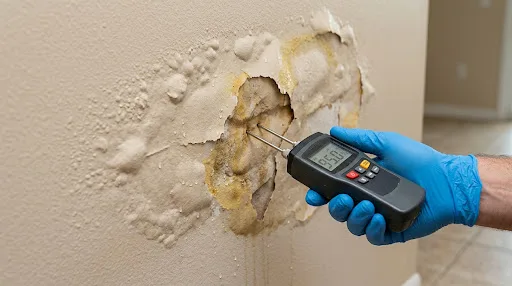
What you can’t see in your Wilton Manors home may be costing you thousands. Hidden water damage — moisture accumulating inside wall cavities, beneath flooring, or in ceiling assemblies without any visible surface evidence — is one of the most expensive types of property damage precisely because it progresses silently for weeks or months before becoming obvious. By the time visible mold, drywall damage, or structural issues appear, the restoration scope is typically 3–5× larger than it would have been if the moisture was detected early. These five signs indicate that your Wilton Manors home may have hidden water damage that warrants a professional moisture inspection.
Hidden Water Damage Inspection in Wilton Manors
We use thermal imaging and moisture meters to find what the eye can't see. Call (877) 698-1311 for an assessment.
Why Hidden Water Damage Is Especially Risky in Wilton Manors
South Florida’s subtropical climate — with year-round humidity at 70–85% and temperatures that never drop below mold’s growth threshold — means that hidden moisture in organic building materials doesn’t stay dormant. It grows. A slow pipe leak that generates 2–3 gallons of moisture per day inside a wall cavity will cause mold colonization within 2–4 weeks in Wilton Manors’ climate, whereas the same leak in a dry Colorado climate might take months to generate visible mold.
The practical consequence is that the window between “detectable early warning sign” and “significant mold remediation scope” is much shorter in Wilton Manors than anywhere in the northern U.S. Identifying these warning signs early and acting on them is the most cost-effective response available to Broward County homeowners.
Sign 1: Unexplained Increase in Water Bills
A water bill that rises 15–25% or more without a corresponding change in usage is one of the most reliable early indicators of a hidden leak. A ½-inch supply line with a pinhole leak can release 25–50 gallons per day — enough to significantly raise a water bill while producing no visible moisture at the surface of the wall it’s running through. The water instead migrates through wall insulation and into adjacent materials.
What to do: Check your water meter with all fixtures off. If the meter is moving when no water is being used, you have an active leak. Call for a leak detection inspection using thermal imaging to locate the source.
Sign 2: Musty Odor Without a Visible Source
A musty, earthy odor in a room or area of your Wilton Manors home that you can’t explain with visible mold is a strong indicator of mold growing inside a wall cavity, beneath a subfloor, or in HVAC ductwork. This odor is produced by microbial volatile organic compounds (MVOCs) — gases released by active mold colonies. The presence of the smell means mold is already actively colonizing and releasing spores.
In older Wilton Manors homes in the South Wilton Manors and East Wilton Manors neighborhoods, this odor most commonly develops in bathrooms (where tile grout failures allow moisture behind walls), kitchens (from dishwasher and sink drainage connections), and utility closets (from water heater condensation in humid months).
What to do: A professional mold inspection with air quality sampling identifies mold types and concentrations and helps locate the source. This is the first step in mold remediation — do not attempt to mask the odor with air fresheners, as this delays identification and allows mold to spread.
Sign 3: Soft, Discolored, or Bulging Walls and Ceilings
Drywall and plaster that feels soft to the touch, shows discoloration (yellow, brown, or dark staining), or has visible bulging or bubbling paint is retaining moisture — either currently or from a past event that wasn’t fully dried. Soft drywall indicates saturation; the gypsum core has broken down and can no longer support its surface. Staining indicates minerals and contaminants carried by water as it evaporated into the drywall surface over time.
In Wilton Manors’ older homes, ceiling staining is particularly common from two sources: long-term roof condensation in attics with inadequate ventilation, and historical roof leaks from tropical storms that were temporarily repaired but never had interior drywall properly assessed and dried. A ceiling stain that appears to have dried may still have active mold growth on its back face where it contacts attic insulation.
What to do: Don’t paint over stains as a fix — this conceals the damage without addressing the moisture source. Call for a moisture inspection. If the moisture source is confirmed resolved (the roof was repaired, the pipe was fixed), a professional assessment determines whether the drywall can be dried in place or must be replaced.
Sign 4: Warped, Buckled, or Separating Flooring
Wood floors, laminate, and even tile can indicate hidden moisture below the surface. Hardwood flooring that cups (edges higher than the center), crowns (center higher than edges), or develops gaps between boards has experienced moisture-driven dimensional change in the wood. Laminate flooring that separates at joints or develops bubbles has been exposed to moisture at the subfloor level. Even tile — which itself is impermeable — can develop looseness or cracking if the mortar beneath it has been undermined by moisture-related subfloor movement.
In Wilton Manors, this pattern most commonly appears from two sources: slab moisture infiltration (the Biscayne Aquifer’s high water table pushing moisture upward through concrete slabs without modern vapor barriers) and appliance or plumbing leaks that run unseen under flooring for extended periods.
What to do: A moisture meter reading on the subfloor surface (accessible through a cabinet or register opening in most homes) confirms whether moisture is present below the flooring. Thermal imaging can map the extent of moisture spread without demolition.
Sign 5: Visible Mold Outdoors Near Foundation or Roof Edges
External mold on roof overhangs, at foundation level, or on exterior walls facing prevailing weather is often the first external sign that moisture is also infiltrating the interior. In Wilton Manors’ climate, exterior mold on block walls or stucco indicates sustained moisture contact — usually from inadequate roof drainage directing runoff against the wall, or from joint sealant failures at windows or doors allowing water behind the exterior cladding.
External mold at foundation level, particularly on the north or east faces of homes that receive less drying sunlight, indicates that soil moisture is regularly in contact with the exterior wall — a pattern likely to be driving interior moisture accumulation as well.
What to do: Trace the moisture pathway from the exterior mold source. Inspect gutters, downspout discharge locations, and window/door caulk condition. Interior moisture inspection confirms whether infiltration has already reached structural materials.
Frequently Asked Questions
How do professionals detect hidden water damage in Wilton Manors homes?
The primary tools are: thermal imaging cameras (which detect temperature differentials that indicate moisture in wall cavities or subfloor materials without opening walls), moisture meters (which measure moisture content of specific materials), and borescope cameras (which allow inspection of wall cavity interiors through small drilled openings). Air quality testing identifies mold spore counts and types. These tools together give a complete picture of hidden moisture without requiring demolition.
What does a moisture inspection cost in Wilton Manors?
Professional moisture inspections in Wilton Manors typically cost $200–$500 depending on home size and the extent of the inspection. If the inspection is being done in connection with a water damage claim, the inspection cost is typically included in the mitigation scope and covered by insurance. Read our complete restoration guide for more on what water damage restoration involves and costs.
How do I prevent hidden water damage in my Wilton Manors home?
The most effective preventive steps are: installing smart water leak sensors at all supply shutoffs and under appliances, scheduling plumbing inspections every 3–5 years for homes built before 1985, ensuring proper grading away from the foundation, maintaining roof drainage systems before each hurricane season, and addressing any signs from this list immediately rather than monitoring them. The cost of these preventive measures is a small fraction of the cost of restoration after a significant hidden water damage event.
Related Resources:
- Complete Guide to Water Damage Restoration in Wilton Manors
- Pre-Hurricane Season Home Inspection Checklist for Wilton Manors
- Older Homes in Wilton Manors: Water Damage Risks and Solutions
Suspect Hidden Water Damage in Your Home?
Call Wilton Manors Water Damage Restoration at (877) 698-1311 for a thermal imaging moisture inspection. We serve all of Broward County.