Water Damage in Wilton Manors Condos and Townhomes, FL: Who Pays?
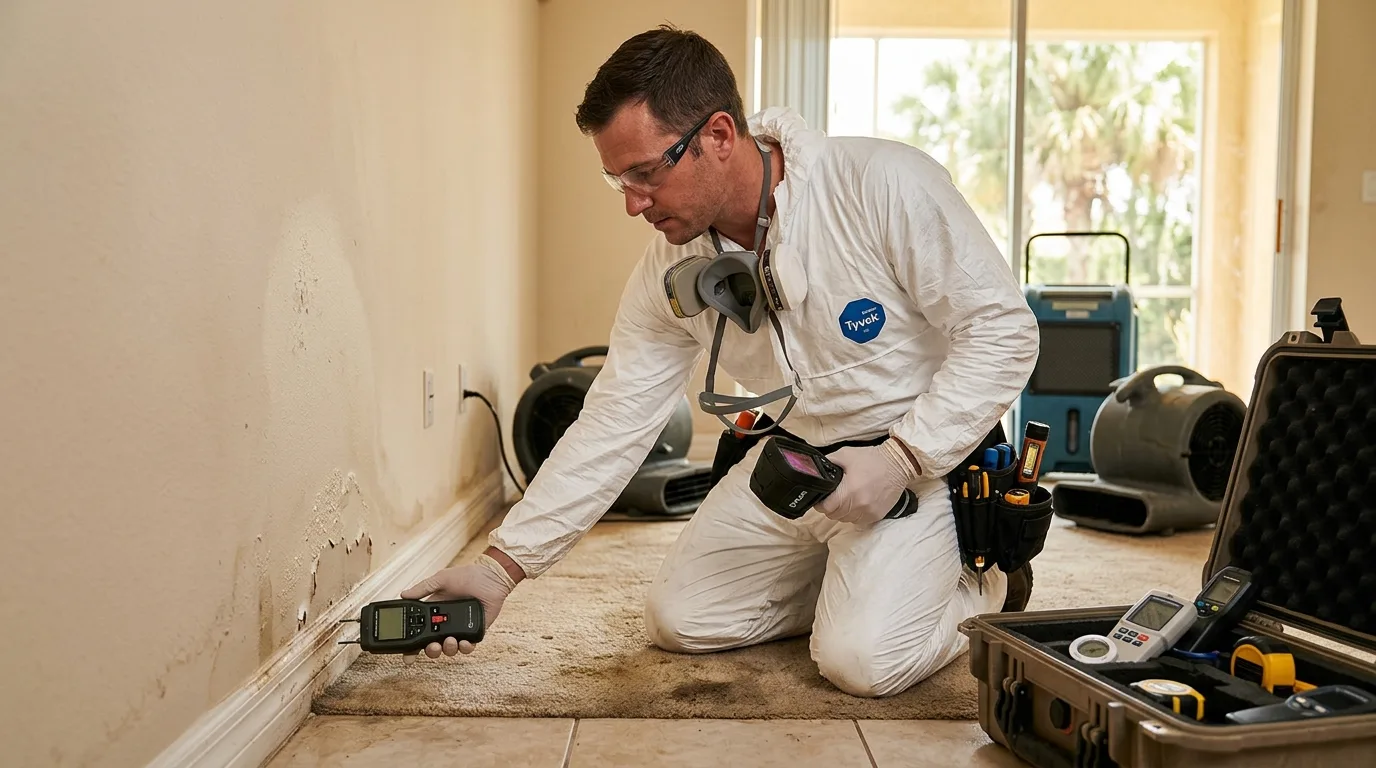
Water damage in a condo or townhome presents a set of complications that single-family homeowners never encounter. When a water event in one unit damages a neighboring unit, the question of who is responsible — and whose insurance pays — depends on your HOA documents, the source of the water, and Florida condominium law. For the dense multi-family housing that makes up a significant portion of Wilton Manors’ residential stock, these questions are not hypothetical. Water traveling between units is one of the most common and most contentious water damage scenarios in Broward County’s condo market.
Multi-Unit Water Damage Response in Wilton Manors
We work with HOA management, unit owners, and insurance adjusters simultaneously. Call (877) 698-1311 for 24/7 response.
Why Multi-Unit Water Damage Is Common in Wilton Manors
Wilton Manors’ 2-square-mile urban core contains a high density of condominiums, duplexes, and townhomes — many of them 1960s–1970s vintage construction with shared plumbing systems running through floors and walls between units. In this construction type, a water event in one unit travels rapidly to adjacent units: water from an upstairs unit flowing through the floor structure into the unit below, or from a shared wall pipe failure affecting both sides of a party wall.
The dense layout of Wilton Manors’ residential buildings — identified by the city’s own neighborhood association framework as a characteristic of all four neighborhood quadrants — means that when a water event begins in one unit, the window before it affects neighboring units is measured in minutes, not hours. Rapid response is even more critical in multi-unit buildings than in single-family homes.
Who Is Responsible for Condo Water Damage in Florida?
Florida condominium law and your specific HOA documents (Declaration of Condominium) govern responsibility for water damage in condo settings. The general principles are:
Unit owner responsibility: Each unit owner is responsible for damage originating from within their unit — including plumbing inside the unit, appliances, and negligent actions. If your washing machine hose fails and damages the unit below, you are typically responsible for the damage to the neighbor’s unit as well as your own.
HOA/Association responsibility: The association is typically responsible for damage originating from common elements — building plumbing mains, roof structure, exterior building envelope, and shared spaces. If a common-element plumbing main fails and causes water damage to your unit, the association’s master policy generally covers the structural damage.
Negligence determination: When the source of water is in dispute, negligence analysis determines responsibility. If a unit owner failed to maintain plumbing they were responsible for maintaining, causing preventable failure, they bear responsibility for resulting damage.
Key document to read: Your Declaration of Condominium specifies exactly which elements are the unit owner’s responsibility vs. the association’s. This document — available from your HOA management company — is the definitive reference for responsibility allocation in your specific building.
Insurance Coverage in Multi-Unit Water Damage
Unit owner’s HO-6 policy: Covers damage to the interior of your unit and your personal property from covered events. May also include “loss assessment” coverage that pays your share of an HOA assessment related to a water damage event affecting common elements.
HOA master policy: Covers the building structure, common areas, and (depending on the policy type) may cover unit interiors back to the original construction (“bare walls” vs. “all-in” policies). Check your association’s policy type — it determines whether your fixtures, flooring, and cabinets are covered by the master policy or your HO-6.
Flood insurance: For buildings in FEMA flood zones (which includes much of Wilton Manors), flood insurance is separate from both the HO-6 and master policy. NFIP condo policies (RCBAP) cover the building structure; individual unit owners may need separate flood coverage for personal property and building improvements.
The Practical Steps When Water Damage Affects Multiple Units
Step 1 — Control the source immediately. Whether it’s your unit or a neighbor’s, shutting off the water source reduces damage to all affected units.
Step 2 — Document from your unit. Take photos and video of all damage in your unit immediately — before any cleanup. This is your evidence for the claims process regardless of whose insurance ultimately pays.
Step 3 — Notify HOA management immediately. HOA management must be notified whenever water damage may involve common elements or multiple units. Most HOA documents require prompt notification as a condition of coverage.
Step 4 — Call for emergency extraction. Multi-unit buildings require coordination between units for drying equipment placement — commercial dehumidifiers and air movers may need to run in multiple units simultaneously for the drying to be complete. We coordinate extraction and drying across multiple units in the same building.
Step 5 — Notify your insurance carrier. File a claim under your HO-6 policy regardless of whose responsibility the source is. Your carrier can pursue subrogation (recovery from the responsible party’s insurance) — that’s their job, not yours.
Practical Uses of Our Multi-Unit Response
- Upstairs unit pipe failure affecting unit below: We extract in both units simultaneously and coordinate moisture mapping through the floor/ceiling assembly between units.
- Shared wall pipe failure affecting both sides: Drying equipment is placed in both units with coordinated monitoring — the shared wall assembly must reach target moisture content on both sides.
- HOA-coordinated response after storm flooding: We work directly with HOA management for building-wide response after storm events that affect multiple units.
- Pre-sale moisture inspection for Wilton Manors condos: We perform moisture assessments for buyers and sellers navigating disclosure requirements in condo transactions.
Frequently Asked Questions
My upstairs neighbor caused water damage to my condo in Wilton Manors — what do I do?
Document the damage immediately with photos. File a claim with your own HO-6 insurer — let them pursue subrogation against the responsible party’s insurer. Notify HOA management and obtain the HOA’s incident report. Call for emergency extraction regardless of the insurance dispute — your HO-6 policy requires reasonable mitigation steps, and delay increases your damage. The responsibility question is resolved by insurance companies; your job is to document and mitigate.
Does my HOA master policy cover water damage restoration in my Wilton Manors condo?
It depends on the policy type. “Bare walls” master policies cover the building structure to the original unfinished state — your fixtures, flooring, and improvements are your HO-6’s responsibility. “All-in” master policies cover original fixtures and finishes within units. Check with your HOA management to determine your master policy type. This directly determines whether you need to file under your HO-6 or the master policy for interior restoration costs.
Can I hire my own restoration contractor for water damage in my Wilton Manors condo?
Yes. Florida law allows you to choose your own licensed contractor for restoration work, regardless of any vendor relationship the HOA may have. Your HO-6 insurer may have preferred contractors, but you are not required to use them. Ensure any contractor you hire holds a current Broward County contractor license and IICRC certification.
Related Resources:
- Emergency Water Extraction Services in Wilton Manors
- Water Damage Insurance Claims in Broward County
- Complete Guide to Water Damage Restoration in Wilton Manors
Multi-Unit Water Damage? We Coordinate Everything
Call Wilton Manors Water Damage Restoration at (877) 698-1311. We work with HOA management, unit owners, and adjusters throughout Broward County.